CBS approach and philosophy
The community-based sociotherapy approach—locally known as Mvura Nkuvure, meaning “heal me, I heal you”—is one of the interventions introduced in Rwanda to support psychosocial wellbeing, unity, and reconciliation. This approach was developed by Dutch
sociotherapist Cora Dekker in collaboration with the Anglican Church of Rwanda (EAR), Byumba Diocese.
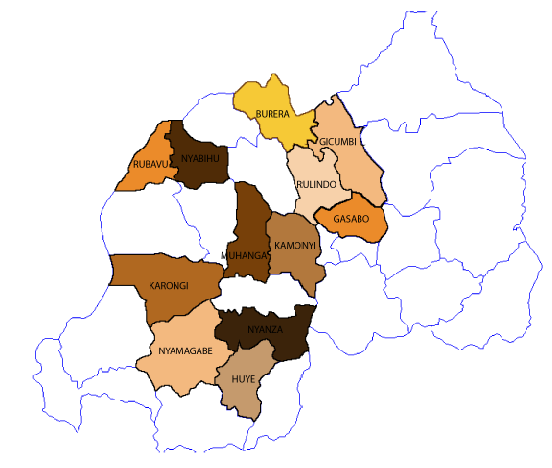
The program began in 2005 in northern Rwanda, later expanding to other regions. Due to positive community outcomes and strong engagement, implementation scaled up in 2014 to additional districts across the country. Community-based
sociotherapy is an approach used to support people in constructively dealing with the psychosocial consequences of war, genocide, violence and other forms of human suffering.
The approach uses the group as a therapeutic medium
to create trust, an open environment for discussion and the formation of peer-support structures. The uniqueness of sociotherapy is that it is done at community level with people from the same neighbourhood usually representing
different socio-historical backgrounds (e.g. genocide survivors or genocide perpetrators), linking the process of psychosocial recovery to the process of grassroots peacebuilding.
Our Work | CBS Rwanda The sociotherapy
group brings together 10 to 15 people from the same community, having different socio-historical backgrounds. The groups are facilitated by two sociotherapists from the same communities. Each group meets on a weekly basis for three
hours and goes through a journey of 15 weeks. The approach uses phases and principles to create an atmosphere in the group that support the formation of peer-support structures.
The phases the group goes through are safety,
trust, care, respect, new life orientations and processing members. The principles that guide the group processes include the inter-est, equality, democracy, participation, responsibility, learning-by-doing and here-and-now. Sociotherapy
is about sharing experiences, ideas, emotions and feelings and learning from each other.
In a society where people have been much affected by war and genocide, the sociotherapy group helps people to feel that there is a place
where people can experience safety again and regain their so-called ‘normal way of living’ without feeling overwhelmed by the consequences of violence.
CBS methodology
Sociotherapy is conducted in groups of ten to fifteen people.
CBS group serves as a therapeutic medium and groups are facilitated by skilled facilitators who are members of the community.
These groups meet weekly
for about three hours over fifteen weeks in a safe and familiar environment, which can range from schools and churches to private homes or outdoor spaces. Two trained sociotherapy facilitators guide the groups through the
phases of “safety, trust, care, respect, new life orientations, and memories of emotions.”
The process is governed by seven principles: “interest, equality, democracy, participation, responsibility, learning-by-doing,
and here-and-now.”
Due to the feelings of unsafety that many war-afflicted sociotherapy participants report, sociotherapy facilitators must first of all create safety. This is done by providing structure, using social activities in the group, but also discussing the meaning of safety to the participants and their social environment.
The second phase, “trust,” presents itself when safety is increased in the sociotherapy group. The aim of the second phase is for participants to regain their ability to trust, which is especially important for those who have experienced trauma. A vital precondition for creating a supportive and healing group environment.
The focus in this phase is on helping those who have had difficult experiences and struggle to take care of themselves or others. The hardship people have gone through are expressed in various ways. Distinctive expressions of care involve reflection and increased caring behaviour in the sense of looking after each other and forms of self-care.
Increasingly felt certainty to safety, trust and care, allows the expression of tensions that have arisen over cultural differences regarding respect. While maintaining the support structure and trust in the group, the facilitators bring the subject respect to the group, allowing people to express their desire specific forms of respect, related to present-day reality.
During the fifth phase, there is room for future-oriented discussions. Often this includes the wish of participants to have a say in the rules of the institutions that govern the basic structure of the participants communal life. By emphasizing the variation of rules (for instance in games), the sociotherapy facilitators enable participants to reflect on effective ways of exercising control.
In the last phase participants are clear about the reliability of the sociotherapy group and therefore favourable conditions arise for deciding whether or not to proceed to a more in-depth manner of processing traumatic emotions. By discussing both good and bad memories, participants find new ways to understand their past experiences. From here, one can be decide whether help from a specialist is desired.
CBS Principles
CBS
is based on 7 principles
As the groups move through the development phases, the sociotherapy principles are applied to each and every phase. The principles are fundamental guiding concepts for structuring the sociotherapy groups.

Equality
Participants in the sociotherapy groups are treated as equals. Despite any formal or informal roles or status in daily life, the members in the group will be treated as equals, including the sociotherapy facilitators.
Democracy
Democracy in the context of sociotherapy means participation in open communication. Group decisions are reached in a transparent way and as a rule become the decision of the group.
Participation
Participation means involvement, joining in and taking part. Participation refers to verbal and non-verbal communication and may have an active or passive character and is a condition for the democratic principle.
Responsibility
In the context of sociotherapy, participants are taking responsibility for participation in open communication with the aim of creating a pleasant group atmosphere and solving problems together. This is another condition for the democratic principle.
Here and now
This principle refers to the focus of discussions in the group and their sphere of influence. The facilitators methodically manage the corrective influence the participants of the sociotherapy group have.
Learning by doing
Through this principle, the participants learn in practice, in and with the sociotherapy group, how recurring problems in their own social systems can be understood, handled differently and if necessary be reduced.
Inter-est
Inter-est is described as “something that lies between people and therefore can relate and bind them together”. In community-based sociotherapy this means to determine how the space between people is used and what attitude is adopted with respect to the other.
CBS
- Reconciliation and restorative justice
- Psychosocial wellbeing and mental health
- Addressing intergenerational legacies of genocide
- Grassroots advocacy and civic engagement
- Socio-economic development and gender equality
- Research
The overall objective of Community-based Sociotherapy intervention is to contribute to restorative justice, social change and psychosocial recovery, in post-conflict settings, for the promotion of sustainable peace across the generations. Specifically, the Sociotherapy approach as introduced in Rwanda aims at:
- Fostering feelings of dignity, safety and trust for all people who are affected by war, genocide and their aftermath;
- Reducing mental and social distress;
- Capitalizing on the vital human capabilities that enable individuals and the entire community to break through the obstacles that prevent living together in peace and facilitate processes of interpersonal and inter-group reconciliation;
- Eliminating disturbed and delayed socio-economic development and
- Breaking through the intergenerational transmission of trauma and violence.
- Genocide against the Tutsi destroyed communal bounds and shattered trust in the aftermath of genocide;
- Large number of individuals who went through traumatic experiences and lost a ‘feeling of being human’;
- Social isolation and a lack of engagement in decision making processes.
- Rwanda was dealing with many post-gacaca issues, our objective became consolidating its successes, but also addressing the left-overs: trauma, long-term reconciliation, reparation, etc.
The people who are targeted to facilitate and participate in sociotherapy/ Mvura nkuvure are a representation of the community, including:
- Genocide survivors
- Ex-prisoners, prisoners and neighbors
- Partners with husbands/wives in prison
- Descendants of genocide survivors and perpetrators
- Single mothers
- Families in conflict
- Returnees from exile
- Refugees